When Breathing Becomes a Health Hazard
: India's Rising AQI Crisis and the Path Forward
10 December, 2025
WOCE Team

Why emergency measures alone won't save our cities from toxic air and what sustainable solutions actually look like.
Every winter, Indian cities disappear under a thick blanket of smog. Schools close. Construction halts. Odd-even vehicle schemes return. People check air quality apps before stepping outside. The Air Quality Index (AQI) becomes dinner table conversation as families debate whether it's safe to send children to school or go for morning walks.
This has become India's new normal. A seasonal emergency that repeats with depressing predictability, triggering the same emergency responses, generating the same headlines, and somehow never quite solving the underlying problem. As AQI levels in Delhi, Mumbai, Kolkata, and other major cities regularly breach "severe" and "hazardous" categories, a uncomfortable question emerges: are we managing air pollution, or just managing our reaction to it?
The distinction matters because it determines whether Indian cities will breathe clean air in five years or still be fighting the same battle with the same emergency measures that provide temporary relief but no lasting solution.
The Numbers That Tell a Grim Story
India's air quality crisis isn't anecdotal. It's documented in data that grows more alarming each year. According to the World Health Organization, 21 of the world's 30 most polluted cities are in India. Delhi regularly records AQI levels above 400, well into the "severe" category where even healthy people experience respiratory effects. Mumbai, traditionally blessed with coastal winds, now sees extended periods where AQI exceeds 300.
The health impacts are devastating. Air pollution contributes to over 1.6 million premature deaths annually in India, according to the Lancet. Children growing up in polluted cities develop reduced lung capacity. Hospital admissions for respiratory and cardiovascular diseases spike during pollution episodes. The economic cost, including healthcare expenses and lost productivity, runs into billions of dollars annually.
These aren't just statistics. They're lives shortened, childhoods compromised, and economic potential lost to something as fundamental as the air we breathe.
The sources are well-documented: vehicular emissions, construction dust, industrial pollution, crop stubble burning, waste burning, and emissions from small-scale industries. What varies is the contribution of each source across different cities and seasons. Delhi's winter pollution owes much to stubble burning and temperature inversions that trap pollutants. Mumbai's air quality issues stem more from construction activity, vehicular emissions, and industrial pollution. Kolkata deals with vehicular pollution and small-scale industrial emissions.
Understanding these variations is crucial because effective solutions must be tailored to local sources, not copied from generic playbooks.
The Emergency Response Trap
When AQI levels spike, governments activate emergency measures. The Graded Response Action Plan (GRAP), designed as a stage-based intervention framework, kicks into action. GRAP-4, the highest level, brings the most stringent restrictions: construction bans, industrial closures, restrictions on certain vehicles, and bans on diesel generators.
These measures are necessary. When air becomes immediately dangerous to breathe, reducing controllable sources of pollution quickly is a public health imperative. GRAP-4 targets immediately controllable sources like construction dust, certain industrial activities, and unregulated fuel burning. The sensor-backed enforcement provides the visibility and accountability needed to ensure compliance during acute episodes.
But here's the uncomfortable truth: emergency measures, by definition, are temporary. They address symptoms, not causes. When pollution levels drop and restrictions lift, the underlying sources remain. Construction resumes. Vehicles return to roads. Industries restart. The pollution builds again until the next emergency triggers the next round of restrictions.
This cycle has repeated for years now, with distressingly similar results. AQI spikes, emergency measures activate, pollution drops temporarily, restrictions lift, pollution returns. It's a treadmill that keeps cities running in place rather than actually moving forward toward clean air.
The lived experience of cities around the world that have successfully tackled air pollution tells a clear story: stage-based emergency responses must sit on top of long-term structural change. Emergency measures buy time and reduce acute health impacts. But sustainable improvement requires transforming the systems that generate pollution in the first place.
What Actually Works: Lessons from Cities That Cleaned Their Air
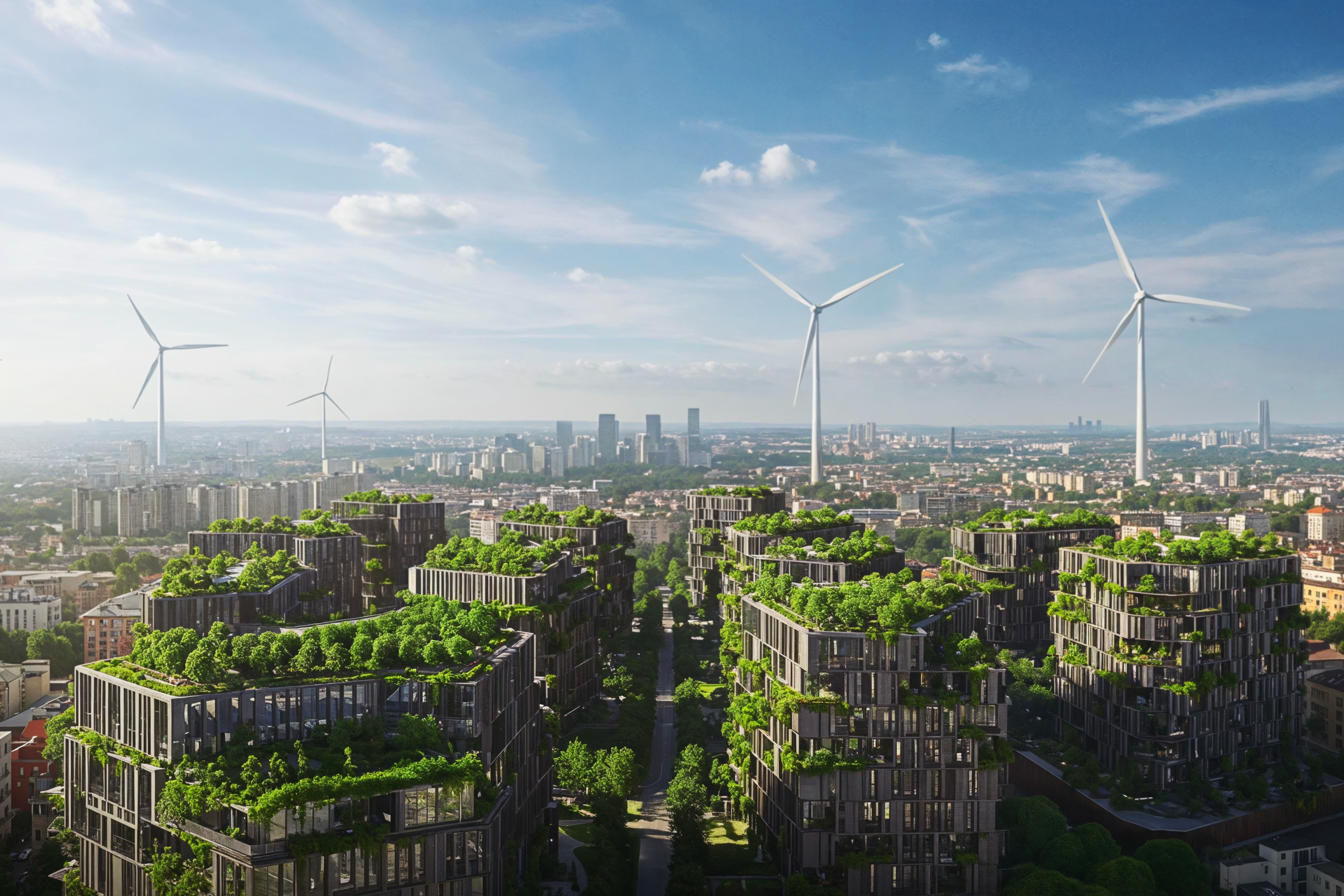
London's air quality transformation provides instructive lessons. In the 1950s, London suffered air pollution so severe it caused thousands of deaths in the Great Smog of 1952. Today, while still facing challenges, London's air is dramatically cleaner. The transformation didn't happen through emergency bans. It happened through systematic, sustained policy interventions.
The Ultra Low Emission Zone (ULEZ), expanded progressively across London, charges vehicles that don't meet strict emission standards. Studies show ULEZ delivered substantial reductions in road-traffic NO₂ and vehicle-exhaust PM2.5 compared to scenarios without intervention. The policy demonstrates that vehicle-focused interventions, when properly designed and enforced, deliver measurable benefits.
But even ULEZ has limitations. Research shows it could not address non-traffic sources, highlighting the need for comprehensive approaches. London's success came from combining vehicle restrictions with cleaner public transport, stricter industrial standards, better construction practices, and transition away from polluting heating systems.
Beijing's air quality journey offers another model. Facing international embarrassment over pollution during the 2008 Olympics, Beijing implemented a multi-year action plan combining vehicle emission standards, coal-to-gas conversions, industrial relocations, and massive investment in public transportation. The result? Average PM2.5 levels dropped by about 35% between 2013 and 2017, demonstrating that sustained, comprehensive action delivers results.
The common thread across successful interventions globally? They don't rely on emergency measures alone. They systematically address major pollution sources through lasting policy changes, infrastructure investments, and enforcement mechanisms that persist beyond pollution episodes.
Mumbai's Moment: From Emergency Response to Structural Change
Mumbai's implementation of GRAP-4 represents both recognition of the air quality crisis and an opportunity to move beyond episodic interventions toward lasting solutions.
Anup Garg, Founder and Director of the World of Circular Economy (WOCE), emphasizes that while GRAP-4 is essential for protecting citizens during dangerous pollution episodes, true progress requires pairing emergency responses with structural transformation. "Single interventions that target one sector produce limited gains unless cities also reduce the share of highly polluting vehicles and accelerate clean transport adoption through low-emission zones, vehicle scrappage incentives, and EV charging networks," Garg explains.
The construction sector, a major contributor to Mumbai's particulate pollution, requires more than temporary bans. "Construction and demolition sites must follow strict dust-control protocols with continuous monitoring," Garg notes. This means mandating dust screens, water spraying, covered material transport, and real-time monitoring systems that ensure compliance becomes standard practice, not emergency exception.
Small-scale pollution sources, often overlooked in favor of more visible culprits, deserve attention. Bakeries, crematoria, brick kilns, printing units, textile dyeing operations, and scrap yards collectively contribute significant pollution. "There should be a transition in polluting small-scale sources to cleaner fuels and best operating practices," Garg emphasizes, acknowledging that this transition requires financial and technical support to be feasible and equitable.
For Mumbai specifically, Garg recommends a three-pronged approach that pairs immediate action with long-term transformation:
First, strengthen GRAP-4 enforcement through transparency and visibility. "Back GRAP-4 with 24/7 data and visible enforcement through ward-level flying squads, live sensor dashboards, and public advisories so citizens see actions and compliance rises," Garg suggests. When people see real-time data and visible enforcement, both public pressure and compliance increase significantly.
Second, fast-track vehicle emission reductions through targeted interventions. "Fast-track a Mumbai-specific Low Emission Zone (LEZ) pilot in dense corridors while scaling EV charging and public-transport capacity," Garg recommends. This targets Mumbai's largest local pollution contributor while leveraging proven international models. A LEZ pilot in areas like Bandra-Kurla Complex or South Mumbai could demonstrate feasibility while building political and public support for broader implementation.
Third, convert temporary emergency measures into permanent standards. "Convert GRAP-4's episodic measures into lasting rules for construction, small industry, and waste burning, with financial and technical support so compliance is feasible and equitable," Garg advises. This transforms emergency interventions into business-as-usual practices that prevent pollution rather than just responding to it.
The Technology and Data Imperative
Modern air quality management requires sophisticated data infrastructure that emergency measures alone don't provide. Real-time sensor networks across cities can identify pollution hotspots, track trends, verify compliance, and enable targeted interventions far more effectively than blanket bans.
"Authorities should employ credible organizations to support Mumbai's civic leadership by bringing data analytics, monitoring technology, and implementation roadmaps that link emergency GRAP action with a multi-year AQI reduction plan," Garg emphasizes. This data-driven approach allows cities to move from reactive emergency responses to proactive management based on predictive modeling and continuous monitoring.
Digital platforms can provide citizens with hyperlocal air quality information, helping them make informed decisions about outdoor activities while creating public pressure for improvement. Transparent data publication builds trust and accountability that episodic interventions can't achieve.
The integration of air quality data with urban planning, transportation management, and industrial permitting creates feedback loops that embed clean air considerations into everyday decision-making rather than treating pollution as a separate emergency issue.
The Economic Case for Clean Air

Opponents of strict air quality measures often frame them as economically costly. Construction bans hurt development. Vehicle restrictions inconvenience commuters. Industrial closures threaten jobs and growth.
This framing ignores the massive economic costs of air pollution itself. Healthcare expenses from pollution-related illnesses, lost workdays from respiratory conditions, reduced tourism due to poor air quality, and decreased worker productivity in polluted environments create economic drag that far exceeds the cost of pollution control measures.
Studies consistently show that air quality improvements deliver economic benefits that outweigh implementation costs. Reduced healthcare expenditure alone often justifies intervention costs, before considering productivity gains, increased property values in cleaner areas, and enhanced quality of life.
The question isn't whether cities can afford to clean their air. It's whether they can afford not to.
Building the Political Will for Long-Term Change
The greatest barrier to transitioning from emergency responses to structural solutions isn't technical or financial. It's political. Emergency measures, for all their limitations, are politically convenient. They demonstrate action during crises, are time-limited, and distribute costs broadly.
Structural changes are harder politically. They require sustained commitment beyond electoral cycles. They create concentrated costs for specific industries or groups while benefits are diffused across populations and time. They demand bureaucratic capacity that many Indian cities lack. They require coordination across departments, levels of government, and jurisdictions that have trouble coordinating during normal times, let alone during reform.
But cities that have successfully cleaned their air demonstrate that political will can be built through visible results, public pressure, and leadership that prioritizes long-term public health over short-term convenience. Mumbai, with its civic engagement tradition and growing environmental consciousness, has the ingredients for this transition if leadership chooses to catalyze it.
The Path Forward: Short-Term Saves, Long-Term Sustains
As Anup Garg succinctly puts it: "Short-term curbs save lives today; long-term systems change will sustain clean air for decades."
This isn't an either-or choice. Indian cities need both emergency interventions during acute pollution episodes and structural reforms that prevent those episodes from recurring with seasonal predictability. GRAP-4 and similar measures play essential roles in protecting public health during dangerous air quality events. But they cannot substitute for the systematic transformation of urban transportation, industrial practices, construction standards, and energy systems that determines whether cities breathe clean air or toxic pollution.
The technology exists. The policy models are proven internationally. The economic case is clear. The public health imperative is undeniable. What's required now is the political will and institutional capacity to move Indian cities from managing air pollution emergencies to building clean air systems that make those emergencies obsolete.
Every child growing up in Indian cities deserves to breathe air that doesn't damage their developing lungs. Every parent deserves to send children outside without checking pollution apps first. Every citizen deserves a city where breathing isn't a health hazard.
This isn't an impossible dream. It's an achievable goal for cities willing to pair emergency responses with structural change, short-term actions with long-term vision, and reactive measures with proactive systems.
The rising AQI levels in Indian cities are a crisis. But within every crisis lies an opportunity for transformation. The question is whether we'll seize it.