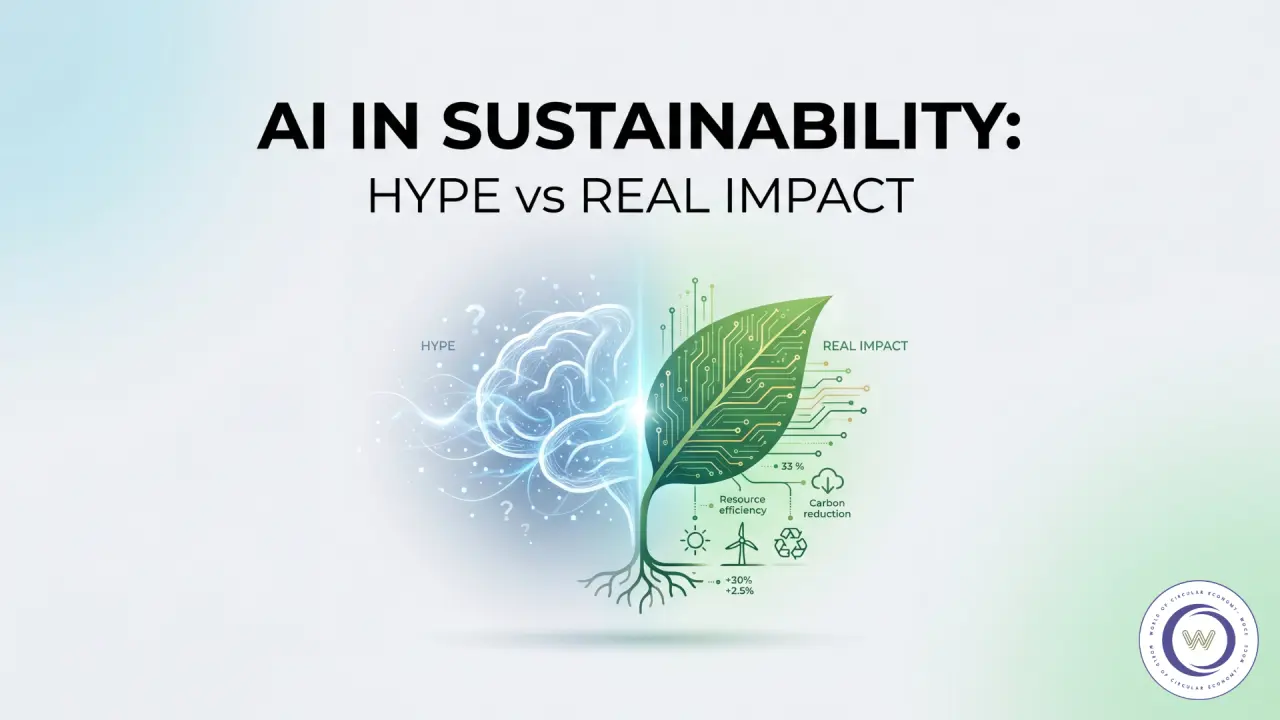
AI in Sustainability: Hype vs Real Impact

  • AI in Sustainability: Hype vs Real Impact

    AI in Sustainability: Hype vs Real Impact

    Artificial Intelligence has quickly become the centerpiece of conversations across industries.


    From boardrooms to policy discussions, AI is being positioned as the solution to everything, including sustainability.


    But when it comes to climate action and ESG, an important question remains:


    Is AI truly delivering impact, or is it just another layer of hype?

    The answer lies somewhere in between. And more importantly, it depends on how organizations choose to use it.


    The Hype Around AI in Sustainability


    There is no shortage of bold claims.


    AI is often described as the tool that will solve climate change, optimize energy systems, and make sustainability effortless.


    While these claims are not entirely unfounded, they can create unrealistic expectations.


    Sustainability is inherently complex.


    It involves fragmented data, evolving regulations, supply chain dependencies, and long-term behavioral change.


    No technology, including AI, can solve these challenges in isolation.


    This is where the hype begins to diverge from reality.


    Where AI Is Actually Making an Impact


    Despite the noise, AI is already delivering measurable value in specific areas of sustainability.


    1. Data Management and Accuracy

    One of the biggest challenges in ESG is not intent, but data.


    Organizations struggle with collecting, standardizing, and validating emissions data across operations and supply chains.


    AI can significantly improve this process by:


    • Automating data collection from multiple sources


    • Identifying inconsistencies and anomalies


    • Reducing manual errors


    This leads to more reliable and audit-ready ESG reporting.


    2. Predictive Insights


    AI enables organizations to move beyond historical reporting.


    Instead of only tracking emissions, companies can:


    • Forecast future emissions trends


    • Identify high-impact reduction opportunities


    • Simulate the outcomes of sustainability initiatives


    This transforms ESG from a reactive function into a proactive strategy.


    3. Operational Efficiency


    AI is also helping optimize resource use across industries.


    From energy consumption in manufacturing to route optimization in logistics, AI-driven insights can:


    • Reduce fuel usage


    • Improve energy efficiency


    • Lower operational costs


    Sustainability, in this context, aligns directly with business performance.
    The Real Limitation: It’s Not AI, It’s Implementation

    If AI is so powerful, why do many organizations still struggle to see results?


    The answer is simple.


    AI is only as effective as the systems and data it is built on.


    Common challenges include:


    • Poor data quality


    • Lack of integration across systems


    • Limited internal capabilities


    • Treating AI as a standalone tool rather than part of a broader strategy


    Without a strong data foundation, AI becomes an expensive experiment rather than a value driver.


    From Hype to Practical Application


    To unlock real impact, organizations need to shift their approach.


    Instead of asking, “How can we use AI?”


    The better question is, “Where can AI solve a specific problem in our sustainability journey?”


    This shift leads to more focused and measurable outcomes.


    For example:


    • Automating ESG reporting instead of manually compiling spreadsheets


    • Using AI to validate supplier emissions data


    • Integrating ESG metrics into operational decision-making


    These are practical use cases where AI delivers tangible value.


    The Role of Platforms Like esgpro.ai


    This is where structured, purpose-built platforms become critical.


    Solutions like esgpro․ai by World of Circular Economy are designed to bridge the gap between AI capability and real-world application.


    Rather than treating AI as a standalone feature, esgpro․ai integrates it into the ESG workflow.


    This enables organizations to:


    • Maintain the integrity of your ESG data with built-in validation and verification workflows


    • AI identifies and corrects data discrepancies and errors


    • Robust ESG data capture by utilizing AI to ensure accurate and efficient data collection


    • Gain real-time visibility through dashboards and track progress


    • Improve accuracy and reduce manual effort


    • Utilize predictive analytics to forecast emissions and track progress towards net-zero

    The focus is not on showcasing AI, but on delivering outcomes that matter to businesses.

    A Positive Shift: AI as an Enabler, Not a Replacement

    One of the biggest misconceptions is that AI will replace human decision-making in sustainability.


    In reality, it enhances it.


    AI provides insights, identifies patterns, and improves efficiency.


    But strategic decisions still require human judgment, domain expertise, and long-term vision.


    When used correctly, AI becomes a powerful enabler.


    It allows sustainability teams to move faster, think more strategically, and focus on impact rather than administration.


    Looking Ahead


    The conversation around AI in sustainability is evolving.


    The hype phase is giving way to a more grounded understanding of what AI can and cannot do.


    Organizations that move beyond experimentation and focus on practical implementation will see the greatest benefits.


    Because in the end, sustainability is not about adopting the latest technology.


    It is about using the right tools to solve real problems.


    Conclusion


    AI is not a silver bullet for sustainability.


    But it is far from just hype.


    When applied thoughtfully, it can transform how organizations measure, manage, and act on ESG data.


    The opportunity lies in moving from ambition to execution.


    From isolated tools to integrated systems.


    From manual processes to intelligent workflows.


    That is where real impact begins.


    For organizations looking to leverage AI-driven ESG solutions and build a more efficient, data-driven sustainability strategy, contact WOCE at contact@worldofcirculareconomy.com.