Blog

  • In the bustling ports of global commerce, where customs duties once ruled as the gatekeepers of trade, a new player has emerged: the carbon cost. Just as tariffs shaped economic flows for centuries, the European Union’s Carbon Border Adjustment Mechanism (CBAM) is now transforming international trade by placing a price on carbon emissions embedded in imports. At the World of Circular Economy (WOCE), we see this as a seismic shift,a new era where sustainability is no longer optional but ..


  • As the global push for sustainability intensifies, Singapore is stepping up as a trailblazer in Asia with its expanded mandatory climate disclosure requirements kicking off in 2025. Aligned with the International Sustainability Standards Board (ISSB) standards, these regulations mark a pivotal shift for listed companies and, soon, large non-listed firms, demanding transparency on climate-related risks and opportunities. At the World of Circular Economy (WOCE), we’re committed to helping..


  • The business landscape is shifting, with sustainability taking center stage as a defining force in 2025. Environmental, Social, and Governance (ESG) principles have transformed from an optional add-on to a strategic imperative, influencing corporate strategies and investor choices worldwide. With regulations tightening and stakeholders demanding greater transparency, tracking the right ESG key performance indicators (KPIs) is more critical than ever. This blog explores the top ESG KPIs busine..


  • Imagine a world where every ton of carbon dioxide you cannot avoid releasing into the atmosphere comes with a solution, a way to balance the scales and contribute to a healthier planet. For businesses today, that solution often comes in the form of carbon credits. If you have heard the term buzzing around boardrooms or sustainability conferences but are not quite sure what it means, you are in the right place. This beginner's guide will break down carbon credits, why they matter for your ..


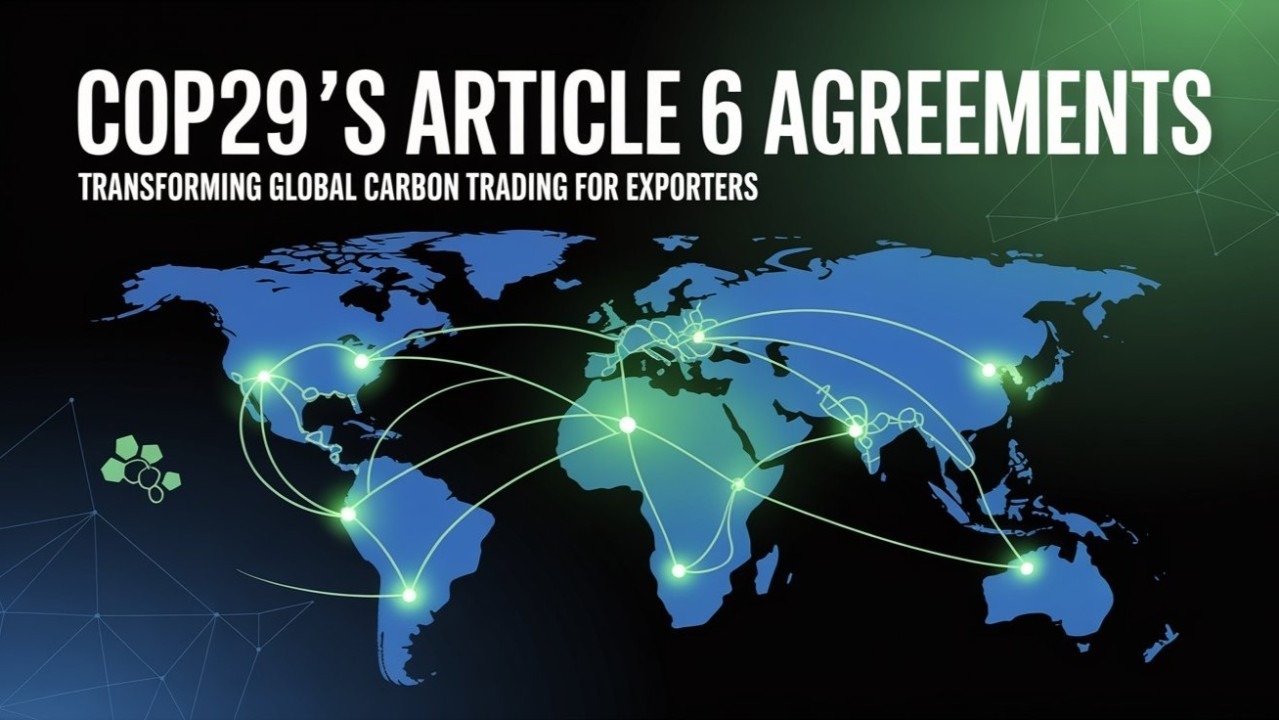
  • It’s 2025, and the world’s racing to net zero. With $130 trillion in global green capital and carbon tariffs like the EU’s CBAM looming, Article 6 of the Paris Agreement is flipping the switch on international carbon trading. Imagine a global marketplace where countries and companies swap carbon credits to cut emissions faster and cheaper. From African solar farms to Brazilian forests, Article 6 is rewriting the rules. We’re unpacking how this game changer is reshaping..