Blog

  •   By 2030, ESG Management May No Longer Exist as We Know It   That statement may sound provocative, but it reflects a reality that is already beginning to emerge.   Over the past decade, ESG has largely been treated as a reporting function. Organizations built sustainability teams, developed disclosure processes, responded to questionnaires, published annual reports, and measured performance against an expa..



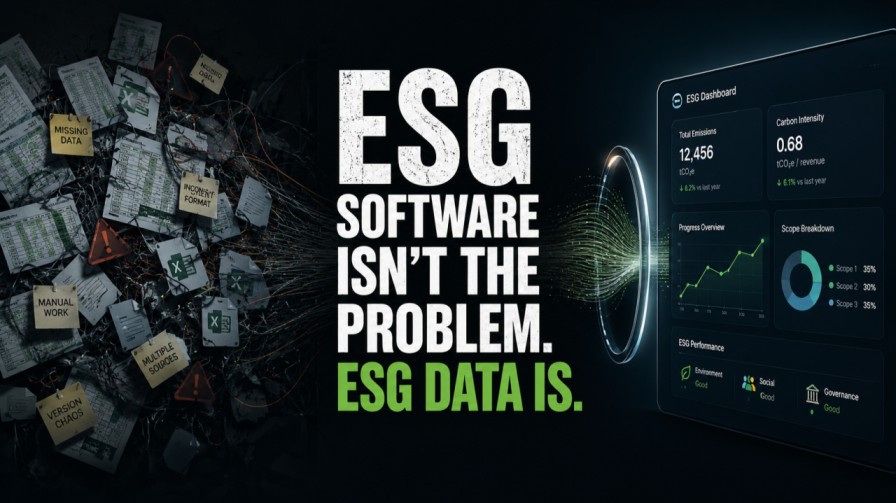
  • Over the last few years, organizations across industries have invested heavily in ESG software. Reporting platforms have multiplied, dashboards have become sophisticated, and sustainability teams now have more technology at their disposal than ever before.   Yet the same challenges persist. Missed reporting deadlines. Supplier data that never arrives. Emissions calculations that don't add up. Compliance gaps that surface at the worst possible time.  ..


  • A sustainability manager at a large manufacturing company recently described their ESG reporting process: "We have 47 Excel files. Each one is owned by a different person. We spend three months before every deadline chasing data, reconciling versions, and praying nothing breaks. When auditors ask for source documentation, we dig through email chains from six months ago."   This isn't an outlier. It's the norm.   ..


  • For most organizations, ESG data architecture is designed around the factory.   Data is captured at the point of production. Emissions are calculated based on fuel consumption, electricity usage, and process-level inputs. Reporting systems are built to aggregate this data into plant-level and enterprise-level disclosures.   This approach works for Scope 1 and Scope 2.   It breaks down the moment Scope 3 becomes materia..


  • The Illusion of Clean ESG Data   Most organizations believe their ESG data is accurate.   After all, it comes from internal systems, plant reports, and supplier inputs. It is reviewed, compiled, and presented in structured formats.   On the surface, it looks reliable.   But when you start validating that data, a different picture often emerges.   Smal..